Thyroid gland

Introduction It is situated in the neck in front of the larynx and trachea at the level of 5th, 6th, and 7th cervical and 1st thoracic vertebrae. It is highly vascular ‘H’ shaped brownish red gland. It weighs about 25 grams which is surrounded by fibrous capsule. It consists of 2 lobes, one on either … Read more

Differences between female and male pelvis

  S.N Female Male 1. It is light and thin. It is heavy and thick. 2. False (greater) pelvis is shallow. False (greater) pelvis is deep. 3. Pelvic brim is large and oval. Pelvic brim is smaller and heart shaped. 4. Acetabulum is small and faces anteriorly. Acetabulum is large and faces laterally. 5. Obturator … Read more

Anaerobic culture methods

Anaerobic culture methods

Introduction Anaerobic bacteria require incubation without oxygen. However, some anaerobes (e.g. Clostridium histolyticum) are aero-tolerant which may produce some growth on the surface of aerobic plates. There are some bacteria which are strict anaerobes (Clostridium tetani). Anaerobiosis can be established by the following methods. Methods of Anaerobiosis 1) By displacement of oxygen i) Cultivation in … Read more

Interferons: types, chemical nature, properties and mechanism of action

Interferons: Types, Chemical Nature, Properties and Mechanism of Action

Introduction to Interferons Interferons are low molecular weight protein, produced by virus infected cells. These, itself induces the formation of a second protein inhibiting the transcription of viral mRNA. These are produced by the host cell in response to the virus particle, viral nucleic acid and non-viral agents. Non-viral agents include synthetic polynucleotides such as … Read more

Cultivation of human viruses

The cultivation of viruses from material taken from lesions is an important step in the diagnosis of many viral diseases. Studies of the basic biology and multiplication processes of human viruses also require that they are grown in the laboratory under experimental conditions. Human pathogenic viruses can be propagated in three types of cell systems. … Read more

Factors affecting antibody production

Antibodies, which are also called immunoglobulin, are proteins which are protective in nature. Usually  produced by the immune system in response to the presence of a foreign substances that can be bacteria, virus, fungi or any other living forms. There are various factors affecting antibody production. They are as follows: a) Age The embryo is immunologically … Read more

Natural resources, types and importance

Natural resources, types and importance

Introduction The natural resources include air, water, land, minerals, forest, wildlife, climate, etc. They are the gifts of nature. The terms ‘nature’ denotes the creation that is aggregate of land, air, water, light-(sun) and sky (zero). All the matters that are not man-made are natural resources. The earth consists of biotic and abiotic (non-living) things. … Read more

Biological functions of complement

Biological functions of complement

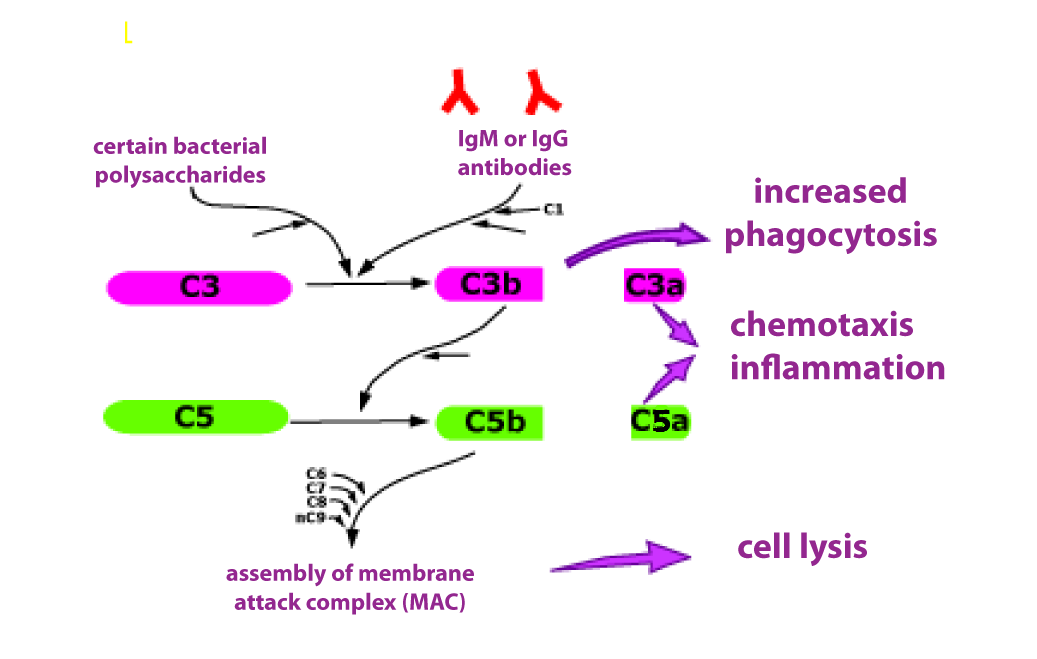
Complement shows various biological functions which are listed here below: 1. Immune adherence and opsonization This involves the covalent binding of complement proteins to the surface of microbial membranes. This opsonization or coating by complement proteins promotes adherence of the opsonized microbial components to the cell membranes of phagocytic cells. Phagocytic cells (macrophages, neutrophils) have … Read more

Alternative pathway of complement system

Alternative pathway of complement system

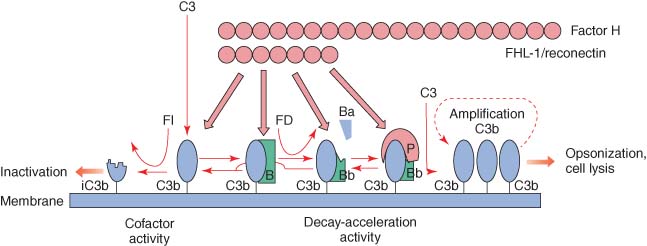
Alternative Pathway The alternate pathway bypasses C1, C4, C2 components and starts at C3 step. It is generally activated by non-immunological means such as bacterial surfaces and their components (e.g. endotoxin, microbial polysaccharides). Some other factors such as inulin, zymosan, yeast walls, cobra venom are also responsible for activation of this pathway. However, the mechanism … Read more

Classical complement pathway

Classical complement pathway

Introduction to Complement Complement is the name given to a system of some non-specific proteins present in normal human and animal serum. These proteins have got the ability to lyse or damage cells (bacteria, virus, tumour cells) and to stimulate some antigen and antibody reactions. This system consists of approximately 20 serum proteins which include … Read more