Stages and Features of Antigen-Antibody Reactions

Stages and Features of Antigen -Antibody reaction

Introduction The combination of antigens (Ag) and antibodies (Abs) occur specifically and in observable manner. There is various usefulness of this type of reaction. Some of them are: A basis for the formation of antibody mediated immunity Helps generally during the cases of infectious diseases. Besides, in tissue injury related to some types of hypersensitivity … Read more

Effect of temperature on microbial growth

Chemical and physical state of the environment greatly affects the activities of the microorganisms. Many environmental factors can be considered among which four key factors control the growth of all microorganisms: temperature, pH, water availability and oxygen. Some other factors can also potentially affect the growth of microorganisms like pressure and radiation. Temperature It is … Read more

Determinants of antigenicity

Antigenicity is the ability to combine specifically with the final products of the responses i.e. secreted antibodies and/or surface receptors on T cells. All molecules having the property of immunogenicity also have the property of antigenicity but the reverse is not true. Some small molecules are antigenic but they are not able to induce a … Read more

Endospores: structure and formation

Introduction Some species of bacteria particularly those of Bacillus and Clostridium, develop structures called endospores. ‘Endo’ as prefix means within and endospores are highly differentiated cells which are able to tolerate harsh environment of heat, chemicals and radiations. They are highly resistant resting phase which can survive in a dormant state through a long period … Read more

Steps and procedure of polymerase chain reaction (PCR)

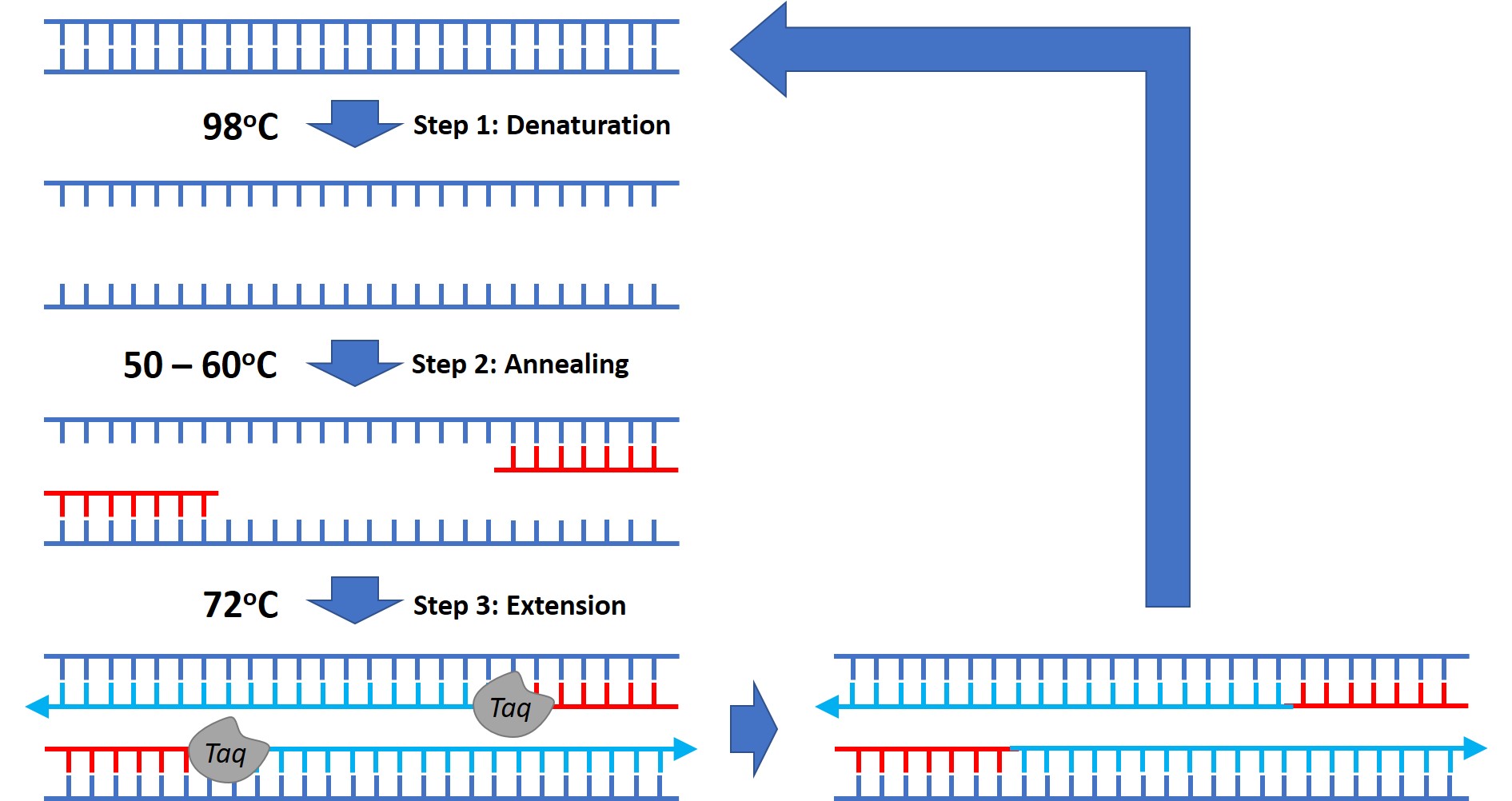
Steps and procedure of polymerase chain reaction (PCR)

Steps of PCR Many cycles of DNA synthesis are carried out in PCR. These cycles are staged by controlling the temperature that reaction takes place. The various steps are: 1. Denaturation of DNA The double stranded DNA should be heated to 940– 960C to break a part the hydrogen bonds forming single strands. Denaturing is … Read more

Polymerase chain reaction (PCR) and its principle

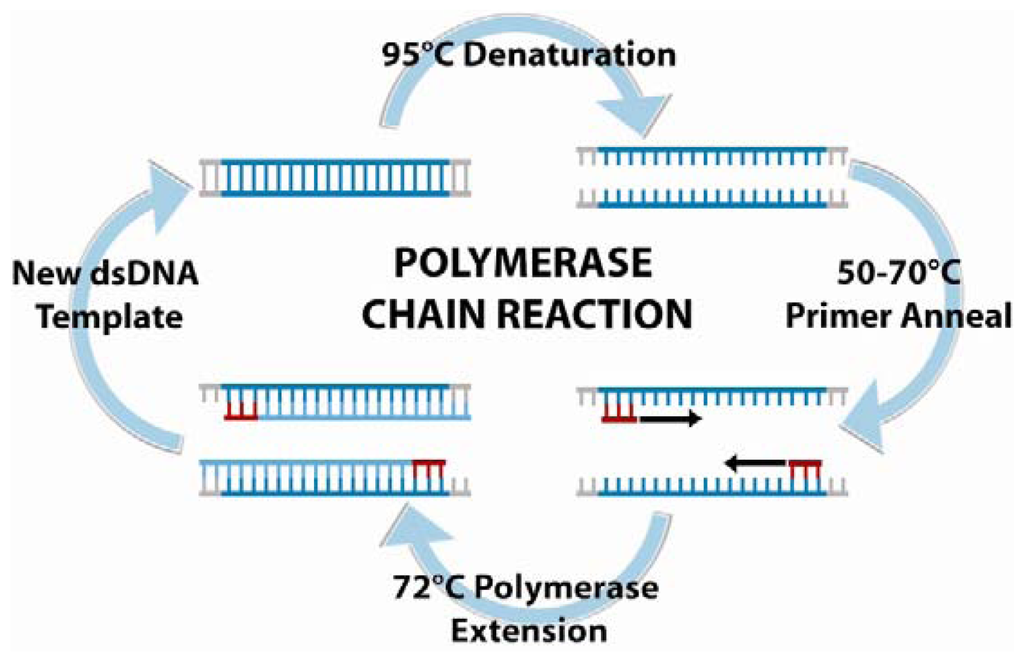
Polymerase chain reaction (PCR) and its principle

Introduction of PCR Polymerase chain reaction (PCR) is one of the significant advances in DNA based technology. It is a rapid, sensitive, inexpensive and simple means of producing relatively large number of copies of DNA molecules from minute copies of source DNA (bacterial, viral, plant and animal). It does not depend upon the quality of … Read more