Specialized transduction and its process

Introduction Specialized transduction can be distinguished from generalized transduction by two properties. Only bacterial genes close to the attachment site of pro-phage can be transduced in this type. It also carries both bacterial genes and phage genes instead of only bacterial genes, like in generalized transduction. So, in specialized transduction certain temperate phage strains can … Read more


Differences between electrolytic cell and voltaic cell

1. It is a designed apparatus where electrolysis is carried out. It is an experimental set up or advice where chemical energy is converted into electrical energy. 2. This cell consists of a glass vessel or made up of any suitable plastic material, in which two electrodes are dipped into an electrolyte solution. Two electrodes  … Read more

Immunodeficiency and its type

Immunodeficiency and its type

Introduction Immunodeficiency diseases are condition where the defense mechanism of the body is impaired lading to repeated microbial infections of varying severity and sometimes enhanced susceptibility to malignancies. In this condition, the system fails to protect the host from disease causing agents or from malignant cells. Deficiency of defense mechanism may include:  Specific immune functions … Read more

Principle and procedure of Southern blotting

Principle and procedure of Southern blotting

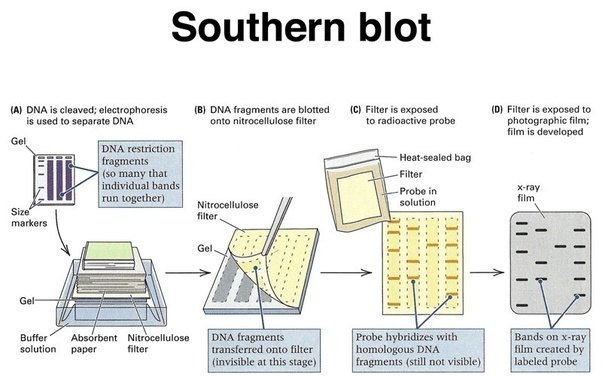
Introduction It is a method developed by E.M Southern (1975). It combines the use of restriction endonuclease, electrophoresis, and DNA probes for analyzing the related genes in a DNA restriction fragment. It is used for various purposes. They are: To detect sequence homology between two DNA molecules without determining the exact base sequence of the … Read more

Components of polymerase chain reaction

Components of polymerase chain reaction

There are various components of PCR for conducting this process. They are DNA template, primers, Taq polymerase, deoxyribonucleoside triphosphates, PCR buffer, dimethyl sulfoxide and thermocycler.   1. DNA template It contains the region of the DNA fragment to be amplified by the PCR process. Successful amplification of the region of interest is dependent upon the … Read more

Applications of polymerase chain reaction (PCR)

Applications of polymerase chain reaction (PCR)

Polymerase chain reaction has various advantages. Some of the advantages of it are as follows. 1. Cloning genes It is used to amplify the gene which can then be inserted into a vector. The DNA can then be transferred  into an organism (the GMO) where the gene and its product can be studied more closely. … Read more

Steps and procedure of polymerase chain reaction (PCR)

Steps and procedure of polymerase chain reaction (PCR)

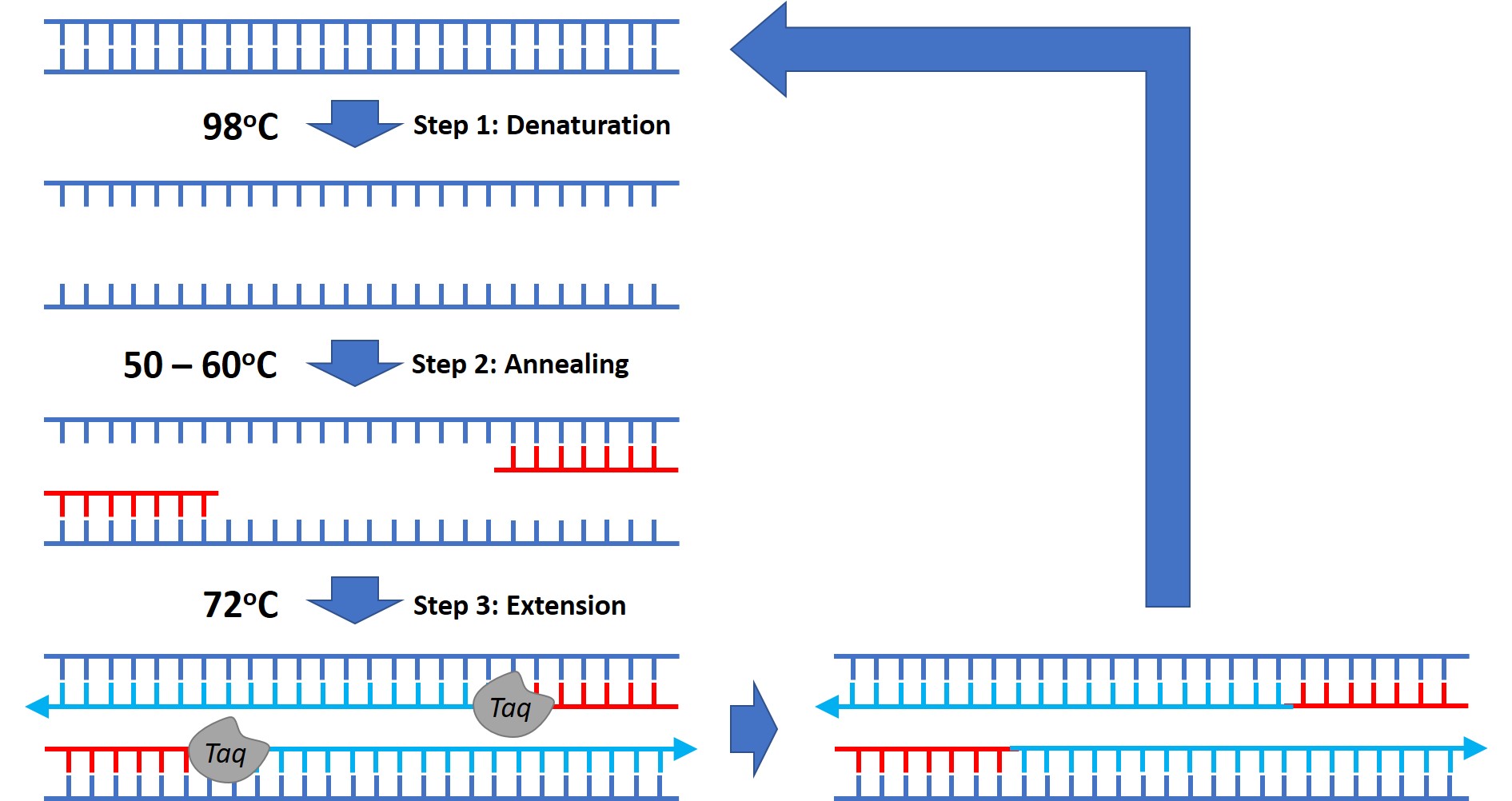
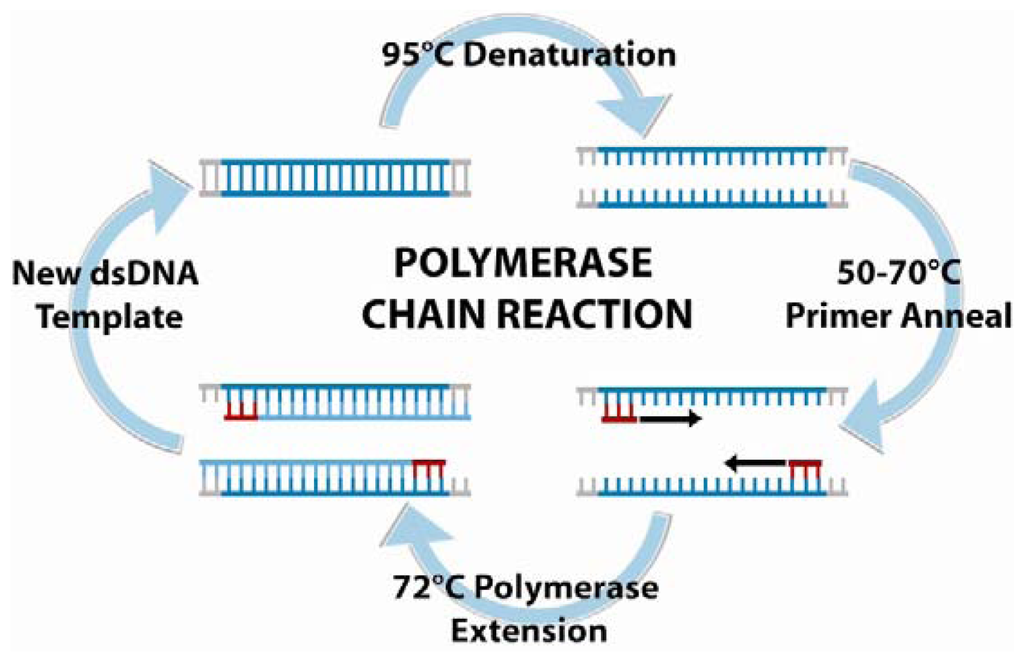
Steps of PCR Many cycles of DNA synthesis are carried out in PCR. These cycles are staged by controlling the temperature that reaction takes place. The various steps are: 1. Denaturation of DNA The double stranded DNA should be heated to 940– 960C to break a part the hydrogen bonds forming single strands. Denaturing is … Read more

Polymerase chain reaction (PCR) and its principle

Polymerase chain reaction (PCR) and its principle

Introduction of PCR Polymerase chain reaction (PCR) is one of the significant advances in DNA based technology. It is a rapid, sensitive, inexpensive and simple means of producing relatively large number of copies of DNA molecules from minute copies of source DNA (bacterial, viral, plant and animal). It does not depend upon the quality of … Read more

Generalized transduction and its process

Generalized transduction and its process

Introduction Bacteriophages not only infect and kill cells but also sometimes transfer DNA from one cell to another. This process by which foreign DNA is introduced into a cell by a virus or viral vector is called transduction. Phages capable of transduction are called transducing phages. Donor strain is the original bacterial strain in which … Read more

Plasmids and its types

Introduction They are small, circular, self-replicating and double-stranded DNA molecule present in bacterial cell in addition to bacterial chromosome. So, plasmids are genetic elements that replicate independently of the host chromosome. Unlike the viruses plasmids do not have an extracellular form and exist inside cells simply as free and typically circular DNA. Plasmids carry gene … Read more