Hybridization involving s, p and d-Orbitals

The process of mixing of the atomic orbitals is called hybridization. There are different types of hybridization like sp2, sp3, sp, sp3d, sp3d2, sp3d, dsp2,d2sp3. The atoms of third period elements have vacant d orbitals. Since, the energy of 3d orbitals is comparable to the energy of the occupied 3s and 3p orbitals (the energy … Read more

Lenz’s Law, Fleming’s Right Hand Rule and Fleming’s Left Hand Rule

Lenz’s Law Lenz’s law is named after the physicist Emil Lenz who formulated it in 1834. It is a qualitative law that specifies the direction of induced current, but states nothing about its magnitude. Analogous to Newton’s third law in classical mechanics. It gives the direction and sign of induced emf or current. It states … Read more

Prevention from Rusting

There are some common methods used from preventing the rusting of iron which are described here below: i) By surface coating Rusting of iron can be prevented by coating the iron surface with oil, grease, paint and varnish, etc. Image source: Tampasteel ii) By electroplating iron with corrosion-resistant metals Certain metals like nickel, chromium do … Read more

Classification of Polymers on the Basis of Molecular Forces

The practical utility of polymers depends upon their mechanical properties such as, tensile strength, elasticity, toughness, etc. These mechanical properties depend upon the nature and strength of forces acting between the polymeric chains. As a result, therefore, the polymers may be classified into various categories on the basis of strength and nature of intermolecular forces … Read more

Applications of Colloids

Colloids find many applications in our daily life and in industry. Some typical applications of colloids are given below: 1) Food Many constituents of our food are colloidal in nature. For example, milk, starch, proteins, fruit-jellies etc., are colloids. 2) Medicine A large number of medicines and pharmaceuticals preparations are colloidal in nature. Some of … Read more

Multi-molecular, Macromolecular and Association Colloids

Colloidal solutions can also be classified on the basis of constitution of the particles of the dispersed phase. The tree types of colloids are given as below: A) Multi-molecular Colloids This is the type of colloid in which the colloidal particles consists of aggregates of atoms or small molecules, having diameters of less than 1nm. … Read more

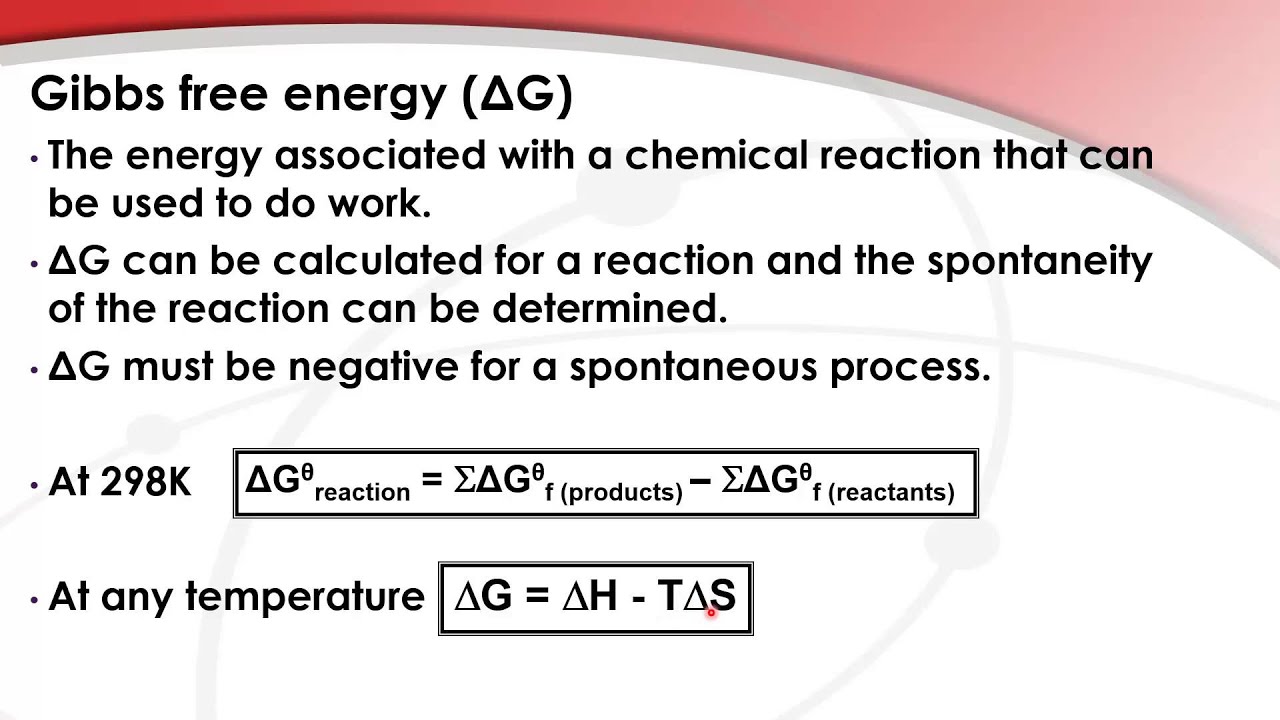
Gibbs’ Free Energy Function

All spontaneous processes tend to achieve a state of minimum energy and maximum entropy. For a system, generally it is not possible to achieve both, the minimum energy and maximum entropy simultaneously. There are cases where either of the two factors is favourable. For example, many endothermic reactions are spontaneous because the favourable entropy factor … Read more

Atomic Imperfections (Atomic Defects)

The atomic imperfections (defects) are caused by some disorder in the arrangement of the constituent particles in any crystal. There are two kinds of atomic defects. They are i) Point defects ii) Lattice defects Point defects The defects caused by a departure from the periodic arrangement of particles in the vicinity of an atom or … Read more

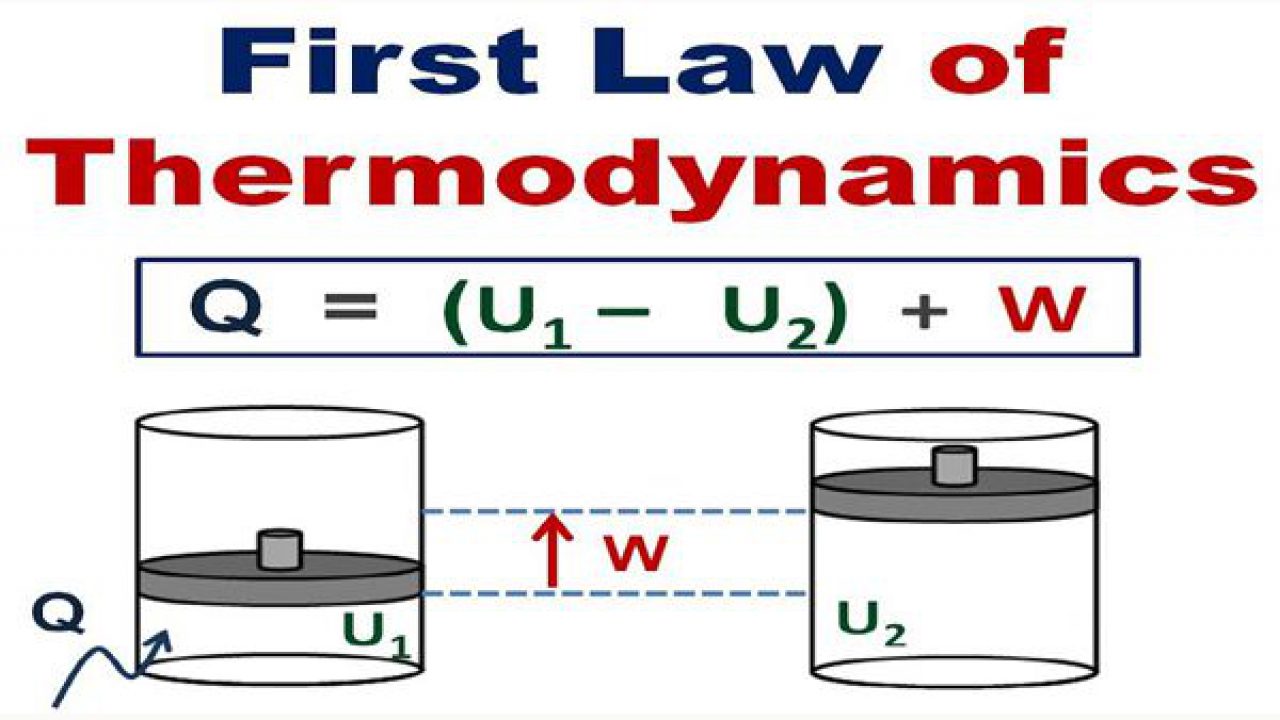
First Law of Thermodynamics

This law is also called the law of conservation of energy. It can be stated in many ways but the following form is found to be quite useful. It states that “energy can neither be created nor destroyed. However, it can be transformed from one form into another”. This means that if certain amount of … Read more