Modes of nutrition

Organisms obtain their food materials in different ways which are of two types generally. They are:  A)  Autotrophic nutrition             B) Heterotrophic  nutrition.  A)  Autotrophic nutrition Gr.autos=self, trophein=to nourish. Also known as holophytic. In this type, organisms synthesize their own nutrients from inorganic constituents of the environment. Typically found in all … Read more

Culture media on the basis of physical state

Media exists in three different forms. They are: Solid culture media. Semisolid culture media. Fluid culture media. Solid culture media: Mainly used in petri dishes as plate cultures. Can also be used in bottles or tubes as stab (deep) or slope cultures. Usually contain a concentration of 1-2% agar to yield a suitable gel. Used … Read more

Blood and its composition

red coloured fluid connective tissue. Alkaline and salty in taste (pH 7.35-7.45). 7-8% of body weight. Average volume is 5-6 litres in male and 4-5 litres in female. Slightly denser than water (1.043-1.060 gm/ml). 5 times more viscous than water. Red due to presence of haemoglobin. Temperature – 100.4°F. Made up of plasma (55%) and … Read more

Phylum: Mollusca, its classification and characteristics

multicellular, triploblastic, system grade of body organization. mostly bilaterally symmetrical except gastropods. mostly marine, some are found in fresh water whereas some are terrestrial. body is soft and unsegmented. body is divided into head, foot and visceral mass. body enclosed in shell formed of calcium carbonate. shell may be external, internal, reduced or absent. locomotion … Read more

Phylum: Echinodermata, its classification and characteristics

exclusively marine. multicellular, system grade of body organization. triploblastic, coelomate and radially symmetrical. free living, free swimming or sedentary. star shaped, oval shaped, globular, or discoidal with distinct oral or aboral surface. literally means spiny skinned animals. body surface is marked by five distinct ambulacral grooves and alternating five interambulacral area. water vascular system, consists … Read more

Phylum: Arthropoda, its classification and characteristics

largest phylum of animal kingdom. found in every possible habitat of earth. multicellular, triploblastic, bilaterally symmetrical, metamerically segmented, system grade of body organization. jointed appendages for locomotion, food collection and sensory purposes. body externally covered by hard chitinous cuticle. body divided into head, thorax and abdomen. In some head and thorax fused to form cephalothorax. … Read more

Phylum: Annelida (segmented worms), its classification and characteristics

multicellular, triploblastic, bilaterally symmetrical with system grade of body organization. mostly aquatic, found in sea water or fresh water, some are terrestrial and burrowing, few are ecto-parasitic. body is elongated, cylindrical and metamerically segmented (body divided into many similar segments). body is covered by non-chitinous cuticle secreted by ectoderm. complete and straight alimentary canal. coelomate. … Read more

Phylum : Aschelminthes/Nemathelminthes (round or thread worms), its classification and characteristics

multicellular, triploblastic, bilaterally symmetrical with system grade of body organization. tube within tube body plan. mostly parasitic, few are free living found in sea water, fresh water or damp soil. body is elongated, cylindrical, unsegmented without lateral appendages. body is covered by cuticle, formed by syncytial epidermis. body cavity is pseudocoel. Thus, they are pseudocoelomate. … Read more

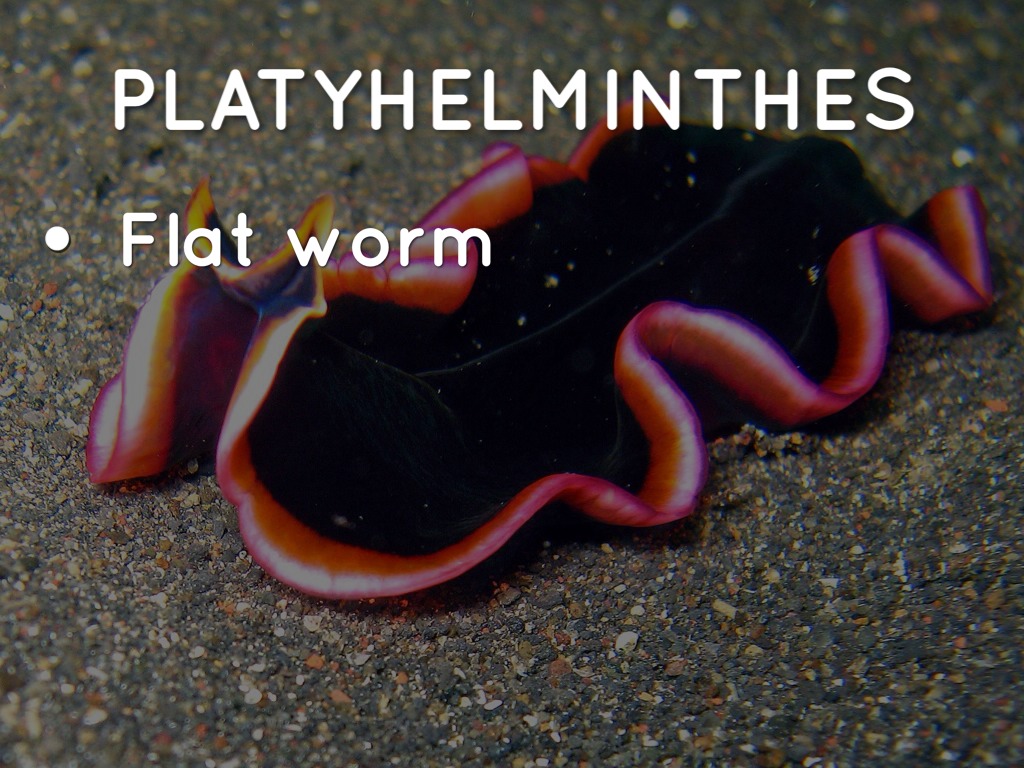
Phylum : Platyhelminthes (Flat worms), its classification and characteristics

multicellular, triploblastic, bilaterally symmetrical. first animals to have organ-system grade of body organization. body is dorsoventrally flattened so called flat worms. size varies from less than mm and more than 10-15 metres. mostly parasitic, few are free living and are found in water or damp soil. parasitic forms have hooks and suckers to stick to … Read more

Phylum : Coelenterata (Cnidaria), its classification and characteristics

multicellular with tissue grade of body organization. aquatic, mostly marine, few are found in fresh water. sedentary or free swimming. mostly radially symmetrical whereas few are asymmetrical. diploblastic i.e. outer layer is called ectoderm and inner layer is called endoderm. There is a jelly like layer present in between these 2 layers called mesogloea.   … Read more